
By Mark Smith 02/02/2026
Under: Team WelfareDemolition Works Safety: PPE, Barriers, and Hazard Signage Best Practices
Demolition workers encounter a range of dangers, including falling debris, shaky structures, dust in the air, loud noises, and the operation of heavy machinery. According to UK laws and guidance from the Health and Safety Executive (HSE), it's essential to plan and manage demolition work carefully to safeguard both workers and the general public.
For demolition contractors, ensuring safety typically involves three main areas:
- Personal Protective Equipment (PPE)
- Physical barriers and exclusion zones
- Clear, compliant hazard signage
Enfield Safety plays a crucial role in supporting demolition projects by providing the necessary PPE, workwear, barriers, and signage to effectively manage these risks while adhering to UK safety standards.
1. Planning and Risk Assessment: Turning Risks into Actionable Steps
Before any demolition work kicks off, it's crucial for a qualified individual to conduct a thorough structural survey and risk assessment. This vital step helps pinpoint potential hazards like the risk of collapse, falling debris, dust exposure, and moving vehicles. Once these risks are identified, it’s important to choose the right personal protective equipment (PPE), barriers, and signage to ensure safety.
How Enfield Safety comes into play at this stage:
- A broad selection of PPE enables contractors to tailor protection levels to the specific demands of demolition tasks.
- Modular signage systems allow construction sites to adjust hazard communication as the project evolves.
- Temporary barriers are effective in enforcing exclusion zones outlined in the demolition plan.
This proactive approach guarantees that safety measures remain practical, visible, and flexible throughout the entire project.
2. PPE for Demolition Work: Controlling Risks with the Right Equipment
PPE is critical in situations where risks can't be completely eliminated in other ways. Given the unpredictable nature of demolition sites, having multiple layers of protection is often necessary.
Head Protection Risks:
- Falling debris
- Structural instability
Enfield Safety offers:
- Safety helmets that meet EN standards
- Accessories like chin straps that keep helmets secure in uneven or elevated areas.
These products are designed to significantly lower the risk of head injuries in high-impact environments significantly.
.jpg)
High-Visibility Workwear
Risks: There are dangers associated with vehicle and machinery collisions, especially in low visibility conditions.
Enfield Safety Solutions:
- High-visibility vests, jackets, and trousers
- Class 2 and Class 3 garments are designed for demolition and heavy machinery environments
Wearing high-visibility workwear significantly enhances safety, ensuring workers are easily seen by operators of heavy machinery. This is crucial in busy or confined job sites.
Eye and Face Protection
Risks: Workers face threats from flying debris, dust, and splinters.
Enfield Safety Solutions:
- Safety glasses and goggles
- Face shields for high-risk demolition tasks
These protective items are vital for preventing eye injuries during tasks like breaking, cutting, and mechanical demolition.
Respiratory Protection
Risks: Inhalation of dust, including silica, poses a serious health threat.
Enfield Safety Solutions:
- Disposable and reusable dust masks
- Respiratory protection suited for dusty environments
Using the right respiratory protection is critical when dust levels can't be controlled through other means, like suppression or extraction.
Hand and Foot Protection
Risks: Common injuries include cuts, crush injuries, and punctures.
Enfield Safety Solutions:
- Cut-resistant safety gloves
- Safety footwear featuring toe protection, internal metatarsal guards, waterproof, vegan certified, antistatic sole and puncture-resistant soles
These safety products address frequent injuries that occur in demolition work due to sharp debris and uneven ground.
3. Barriers and Exclusion Zones: Managing Access to Hazardous Areas
Physical barriers play a vital role on demolition sites, ensuring the safety of workers while preventing unauthorised entry. The main hazards that these barriers address include:
- Falling debris
- Risk of structural collapse
- Movement of machinery and vehicles
- Public access near site boundaries
Enfield Safety offers various barrier solutions, such as:
- Temporary barriers and fencing systems
- Pedestrian segregation options
- Accessories for barriers, allowing signage to be securely placed at eye level
It’s essential that barriers are suitable for the specific risks and are kept up to date as conditions on site evolve.
4. Hazard Signage: Effective Communication for Compliance
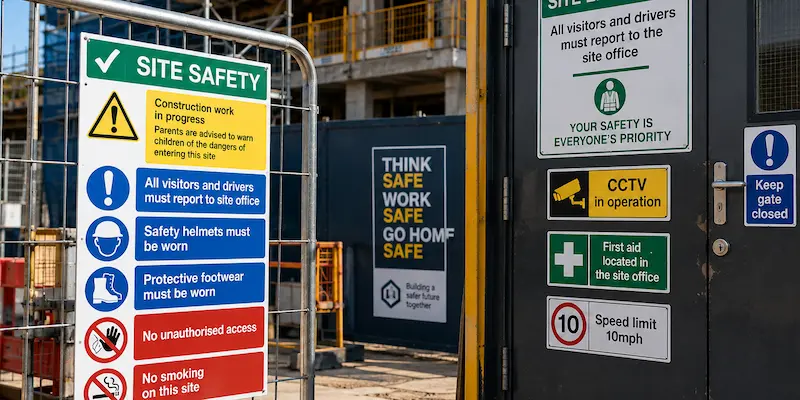
Whenever risks can't be fully eliminated or controlled in other ways, safety signs become necessary. These signs must adhere to the Health and Safety (Safety Signs and Signals) Regulations 1996 and follow standard formats like BS EN ISO 7010.
Common signage requirements for demolition include:
- Demolition warning signs like “Demolition in Progress” and “Danger Demolition Work”
- Access control signs stating “Keep Out” and “No Unauthorised Access”
- PPE mandatory signs indicating that head protection, 5-point high-visibility clothing, and eye protection must be worn
Enfield Safety provides a range of signage solutions, including:
- Standard construction and demolition signs
- PPE mandatory signs
- Starter packs for quick setup on-site
By combining signage with barriers, sites can effectively reinforce safety messages and lower the chances of accidental entry into dangerous areas.
5. Protecting the Public: Site Boundaries and Clear Messaging
Demolition sites are often adjacent to public areas. Contractors have a responsibility to prevent unauthorised access and to shield the public from potential hazards. Enfield Safety aids in public protection by offering:
- Perimeter signs warning about demolition activities
- Barrier-mounted signs to clearly mark exclusion zones
- Clear visual messages that alert the public to dangers before they reach hazardous spots
These actions help to ensure compliance with CDM Regulations and HSE guidelines for public safety.
6. Ongoing Safety Management: Keeping Control Measures Effective
Demolition conditions can change swiftly. It’s crucial to regularly review and update PPE, barriers, and signage as the project progresses. Best practices include:
- Routine checks to confirm that PPE is appropriate and properly worn
- Inspections of barriers for any damage or dislocation
- Replacement of any damaged or obscured signs
Since Enfield Safety provides both disposable PPE and reusable signage systems, sites can quickly adapt to changes while upholding safety standards.
Ensuring safety during demolition isn’t just about one control measure. It requires a coordinated strategy that includes suitable PPE, strong physical barriers, and clear, compliant signage. By aligning risk assessments with practical safety products from Enfield Safety, contractors can:
- Minimise accidents and downtime
- Safeguard workers and the public
- Meet UK regulatory requirements
- Maintain safer and more controlled demolition environments
Speak to one of our expert advisers to order your demolition PPE today.

 Signage
  Publications
  Site Equipment
  Janitorial
  Welfare
  Traffic Management
  Temporary Protection
  Footwear
  Gloves
  Clothing
  Head Protection
  First Aid
  Fire
Fire  Spill
Spill  Height Safety
  Covid-19 Products
  Clearance